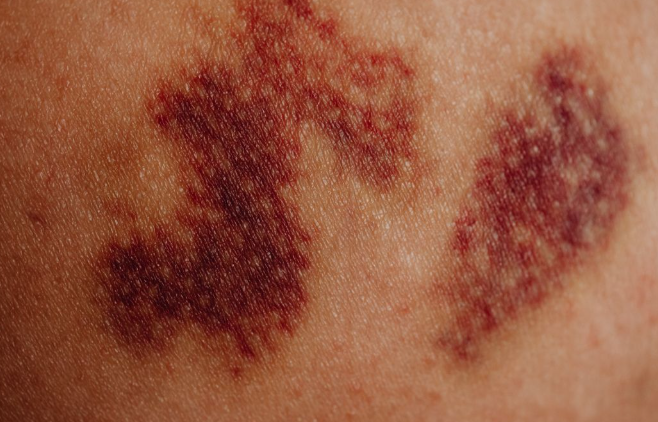
Small Purple-Red Spots on Lower Legs: Causes of Palpable Purpura Explained
Small purple-red spots on the lower legs can be alarming, especially when they appear suddenly or feel slightly raised under the skin. One possible medical term for this finding is palpable purpura.
Unlike simple bruises or flat skin discoloration, palpable purpura refers to small, raised purple or red spots caused by bleeding under the skin and inflammation of blood vessels. It is not a disease itself, but a sign of an underlying condition—some mild, others more serious.
This article explains what palpable purpura is, why it happens, common causes, and when you should seek medical attention.
What Is Palpable Purpura?
Purpura refers to purple-colored spots caused by small blood vessel leakage under the skin. When these spots are palpable, it means they can be felt as slightly raised bumps rather than just flat discoloration.
Key features include:
- Small red, purple, or dark spots
- Usually appear on lower legs and feet
- Slightly raised or firm to touch
- Do not fade when pressed (non-blanching)
- May appear in clusters
These spots are often a sign of blood vessel inflammation (vasculitis).
Why Do These Spots Commonly Appear on Lower Legs?
The lower legs are a common site because:
- Blood pressure is higher in lower limbs due to gravity
- Blood vessels are more exposed to pressure changes
- Immune-related inflammation often affects small vessels in dependent areas
Common Causes of Palpable Purpura
Palpable purpura has several possible causes, ranging from mild reactions to systemic diseases.
1. Small Vessel Vasculitis (Most Common Cause)
This is inflammation of tiny blood vessels in the skin.
Symptoms:
- Red or purple raised spots
- Sometimes burning or tenderness
- Usually on legs or ankles
Possible triggers:
- Infections
- Medications
- Autoimmune reactions
A common type is leukocytoclastic vasculitis.
2. IgA Vasculitis (Henoch-Schönlein Purpura)
This condition involves immune complex deposits in small vessels.
More common in:
- Children (but can occur in adults)
Symptoms:
- Palpable purpura on legs and buttocks
- Joint pain
- Abdominal pain
- Possible kidney involvement
It often follows a respiratory infection.
3. Drug-Induced Purpura
Certain medications can trigger blood vessel inflammation.
Common culprits include:
- Antibiotics
- Anti-inflammatory drugs (NSAIDs)
- Diuretics
- Some blood pressure medications
Symptoms:
- Sudden onset of spots after starting a new drug
- Rash on lower legs
- Sometimes itching or mild pain
4. Infections
Bacterial or viral infections can trigger immune reactions leading to purpura.
Examples:
- Streptococcal infections
- Hepatitis viruses
- Endocarditis (heart valve infection)
Signs:
- Fever
- Fatigue
- Rash on legs
5. Autoimmune Conditions
The immune system may mistakenly attack blood vessels.
Associated conditions:
- Lupus (SLE)
- Rheumatoid arthritis
- ANCA-associated vasculitis
Symptoms:
- Recurring purpura
- Joint pain
- General fatigue
- Organ involvement in severe cases
6. Blood Clotting Disorders
Problems with clotting can lead to skin bleeding.
Causes include:
- Low platelet count (thrombocytopenia)
- Liver disease
- Blood disorders
Symptoms:
- Easy bruising
- Nosebleeds
- Gum bleeding
- Widespread purpura
7. Physical Strain or Exercise-Induced Purpura
Sometimes harmless strain can cause small vessel leakage.
Triggers:
- Long-distance walking or running
- Heat exposure
- Prolonged standing
Characteristics:
- Limited to lower legs
- Improves with rest
- No systemic symptoms
When Palpable Purpura Is More Serious
You should seek medical attention if spots are accompanied by:
- Fever or fatigue
- Joint pain or swelling
- Abdominal pain
- Blood in urine
- Rapid spread of rash
- Painful or ulcerating skin lesions
These may indicate systemic vasculitis or organ involvement.
How Doctors Diagnose Palpable Purpura
Diagnosis is based on clinical examination and tests.
Common investigations:
- Blood tests (inflammation markers, platelets)
- Urine tests (kidney involvement)
- Skin biopsy (confirms vasculitis)
- Infection screening
- Autoimmune antibody tests
Treatment Depends on the Cause
There is no single treatment because palpable purpura is a symptom.
Possible treatments:
- Treating infections (antibiotics if needed)
- Stopping triggering medications
- Anti-inflammatory drugs
- Corticosteroids for severe vasculitis
- Immunosuppressive therapy in autoimmune cases
Can Palpable Purpura Go Away on Its Own?
Yes, in some mild cases—especially those caused by:
- Minor infections
- Exercise or heat
- Temporary drug reactions
However, persistent or recurring purpura always needs evaluation.
How to Take Care of Your Skin If You Notice These Spots
- Avoid unnecessary pressure on legs
- Rest and elevate legs when possible
- Avoid new medications unless prescribed
- Monitor for spread or new symptoms
- Keep a record of timing and triggers
Final Thoughts
Small purple-red spots on the lower legs, especially when palpable, are often a sign of underlying blood vessel inflammation rather than a simple skin issue. While some causes are mild and temporary, others may indicate autoimmune disease, infection, or systemic conditions that require medical attention.
